
June in Tunisia: Celebrating the Humble Lemon
As June arrives, markets across Tunisia fill with one of the season’s brightest treasures: the lemon. Whether squeezed over grilled fish, transformed into a refreshing ‘citronade’ or preserved in salt for future feasts, the humble qarṣ (lemon) is an essential ingredient in Tunisian kitchens.
The Lemon Country of Tunisia
Tunisia’s citrus heritage is closely tied to the Cap Bon peninsula, where mild winters, fertile soils and abundant sunshine create ideal growing conditions. Today, Cap Bon accounts for the majority of the country’s citrus production and is particularly renowned for its lemons, alongside its famous Maltaise oranges.
Several lemon varieties are cultivated in Tunisia. The Eureka is prized for its juicy flesh and bright acidity, making it ideal for fresh consumption and cooking. The Lunari, known for its ability to flower and bear fruit several times a year, is appreciated for its fragrant zest and versatility in the kitchen. Traditional local cultivars also contribute to Tunisia’s rich citrus diversity, reflecting generations of adaptation to different landscapes and growing conditions.
Stories from Farmers
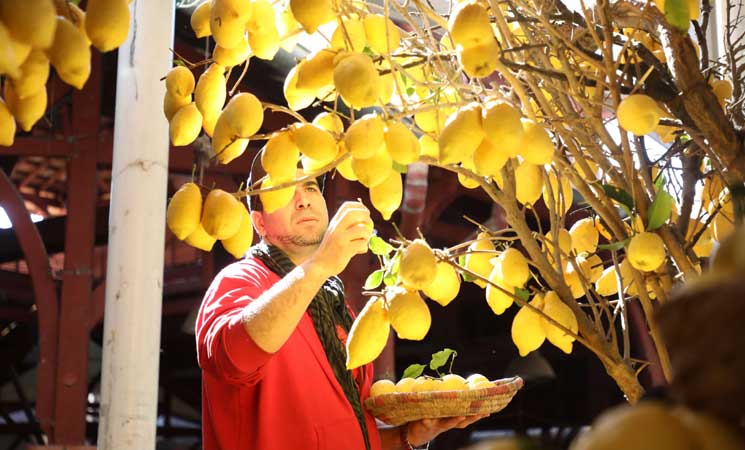
Hamza, the “King of lemons” at his stand in Tunis’s central market, one of the many stops of Sawa Taste of Tunisia’s tours.
One of the lemon tree’s greatest strengths is its ability to produce fruit throughout the year, with a particularly abundant harvest in April and May. This characteristic has long shaped the livelihoods of farming families in Cap Bon.
During the 1960s and 1970s, many residents of Hammamet owned small citrus orchards in areas that have since become residential neighbourhoods. The steady availability of lemons provided a reliable source of income for everyday household expenses. As one local farmer recalls, « If business was slow, you could always pick a Quffa [large woven basket] of lemons, sell them at the market and buy the week’s groceries. » The larger spring harvest, meanwhile, was often reserved for major family milestones such as weddings or home improvements.
Although farming practices have evolved, this strategy still exists today. Larger producers often harvest lemons from a small section of their orchards throughout the season to generate regular cash flow and cover the day-to-day operating costs of their farms. In this way, the humble lemon remains not only a symbol of Cap Bon’s terroir, but also an important pillar of the local rural economy.
My grandma’s lemon tree
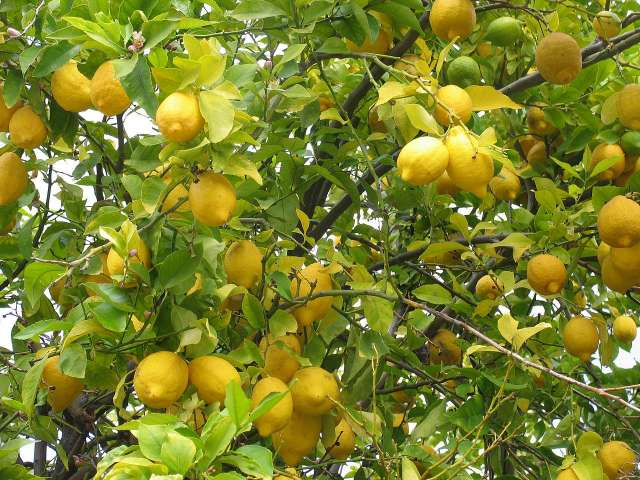
For me, the lemon tree has a special significance. It’s the tree growing in each garden overlooking the residential streets of my grandparents’ neighbourhood. It has also often been an ice-breaker and a facilitator of relations with neighbours: we often ask to grab one from their tree to season our chorba (soup) at dinner time or to flavour a brik at Iftar (breaking of the the fast during ramadan) – because markets are already closed or we don’t want to go just for one lemon! Neighbours also often collaborate to pick their lemons together, transforming the harvest into a refreshing ‘citronade’ to be shared together.
“The scent of citronnade is the fragrance of my childhood, said Lamia, co-founder of Sawa Taste of Tunisia. Every summer in Khéreddine, where Sicilian, Maltese, and Tunisian families lived side by side, we gathered around glasses of homemade citronnade, sharing stories and laughter beneath the Mediterranean sun. Growing up half Italian in Tunisia taught me that home is not one place, but the beautiful blend of cultures, flavors, and memories that remain long after the last sip. »
Tunisian Citronade: Summer in a Glass
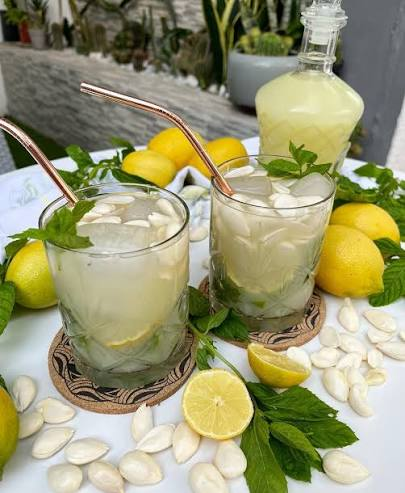
Citronnade with mint and almonds shared by Tunisians on social media
Unlike many lemonades, the traditional Tunisian citronade makes use of the whole fruit, capturing the vitamins and aromas of both the juice and the peel.
Ingredients
- 4–5 fresh, preferably organic lemons
- About 50 g sugar per lemon
- Water
- A blender or food processor
Method
- Wash the lemons thoroughly and remove the ends. If desired, reserve a little zest for another use, but keep most of the peel.
- Cut each lemon into large cubes, leaving the seeds intact. Place two handfuls of lemon pieces in a blender with about 400 ml of water and blend until smooth.
- Strain the mixture through a fine sieve, pressing with a spoon to extract as much liquid as possible. Collect the juice in a large pot and reserve the solids.
- Return the solids to the blender with fresh water and repeat the process to extract the remaining flavour and nutrients. Strain again, combining the liquid with the first extraction, and discard the solids.
- Add sugar to taste and mix well. The resulting citronade is a concentrated syrup that can be diluted with cold water and served over ice.
Many Tunisian families prepare large batches during the lemon season and freeze the concentrate in small portions. It’s one of the excuses to gather at home with friends or family members to prepare a considerable quantity as part of oula (a once yearly preparation of staple items for the household pantry) ready to be diluted and topped with mint and fresh almonds, whenever a refreshing drink is needed, a guest shows up, or if any event is planned for the summer such as a marriage, or a young family member expecting important exam results.
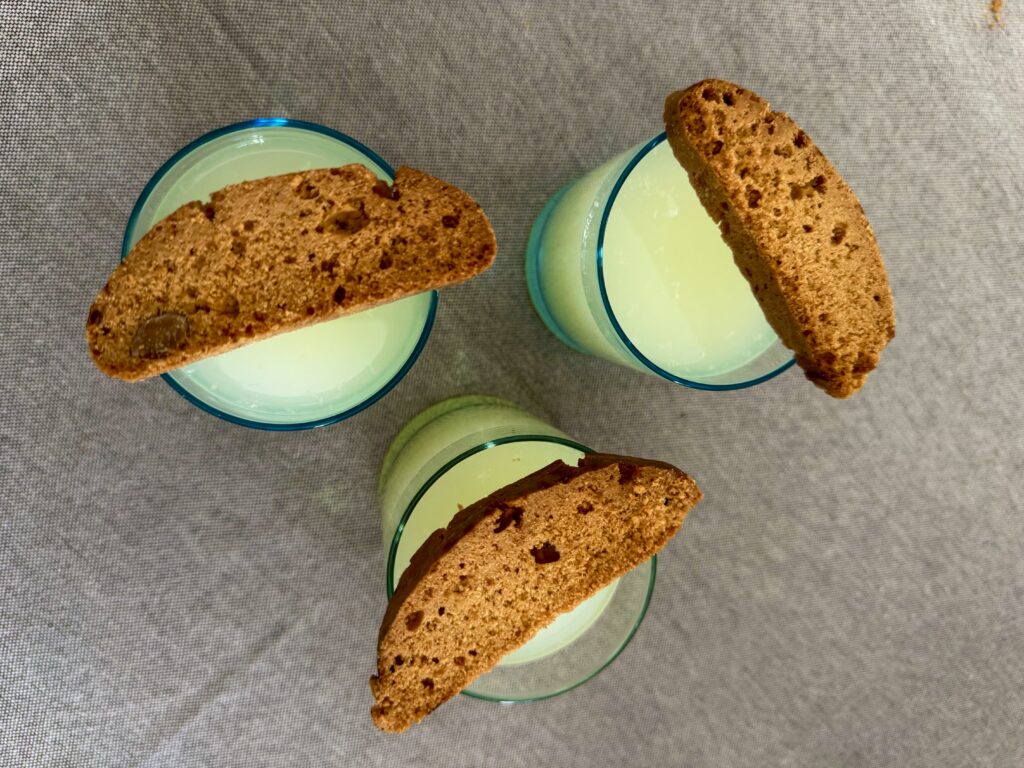
‘Citronnade’ with ‘boulou,’ a dried biscuit similar to Sicilian biscotini
‘Citronnade’ is also a famous preparation in some stores where it is accompanied with a special biscuit called Boulou often associated with Tunisia’s Jewish and Italian communities. It’s the refreshing drink you grab during summer hot days. With the biscuit, it creates the perfect snack when shopping in the country’s medina (old markets).
Preserved Lemons: A Tunisian Pantry Essential
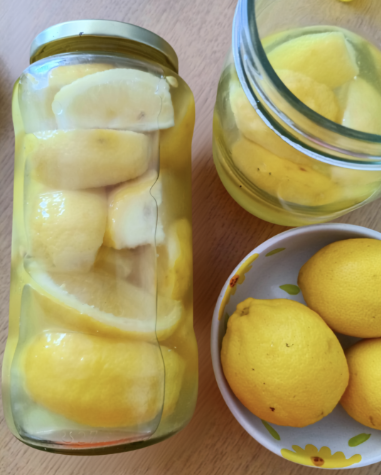
Salt-preserved lemons are another classic way of making the most of the citrus harvest.
Ingredients
- 6 unwaxed lemons
- 6 tablespoons coarse sea salt
- Fresh lemon juice
Method
- Wash the lemons and cut them into quarters, keeping them attached at the base. Fill each cut generously with salt and pack the lemons tightly into a sterilised glass jar. Add any remaining salt and enough fresh lemon juice to cover.
- Leave the jar at room temperature for a few days before storing it in a cool place for three to four weeks.
Once preserved, it is mainly the rind that is eaten, while the pulp is usually discarded. Finely chopped, preserved lemon adds a distinctive salty-citrusy flavour to couscous, salads, grilled fish, vegetable dishes and Tunisian stews. Small cubes can also be mixed into fresh salads or used as a garnish to brighten a meal.
At Sawa Taste of Tunisia, we love celebrating seasonal ingredients and the traditions they inspire. In June, the lemon reminds us that a simple fruit can tell the story of a region—its orchards, its family recipes and the ingenuity of generations who learned to preserve the best of each harvest.